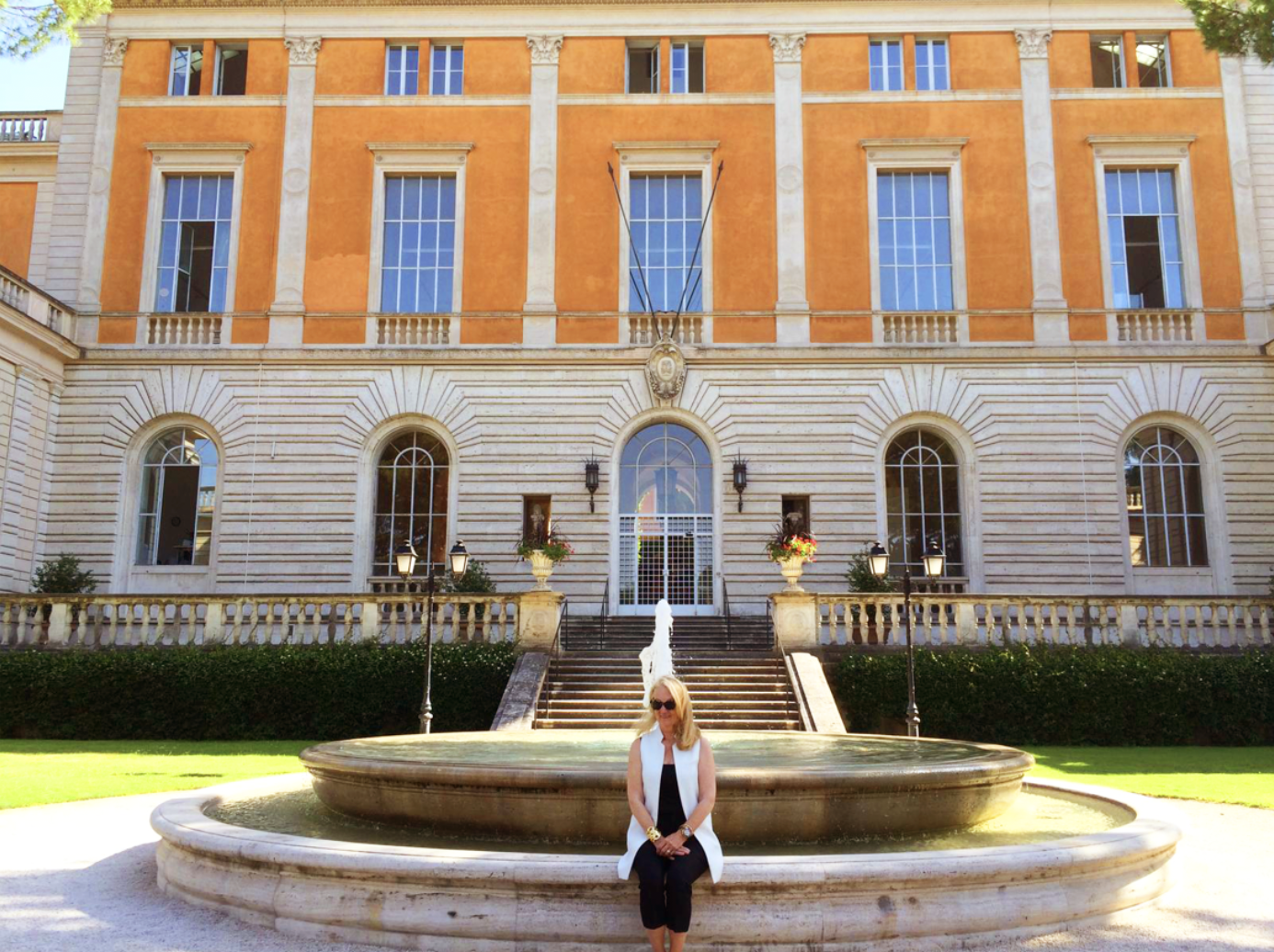
RESIDENCY IN ROME
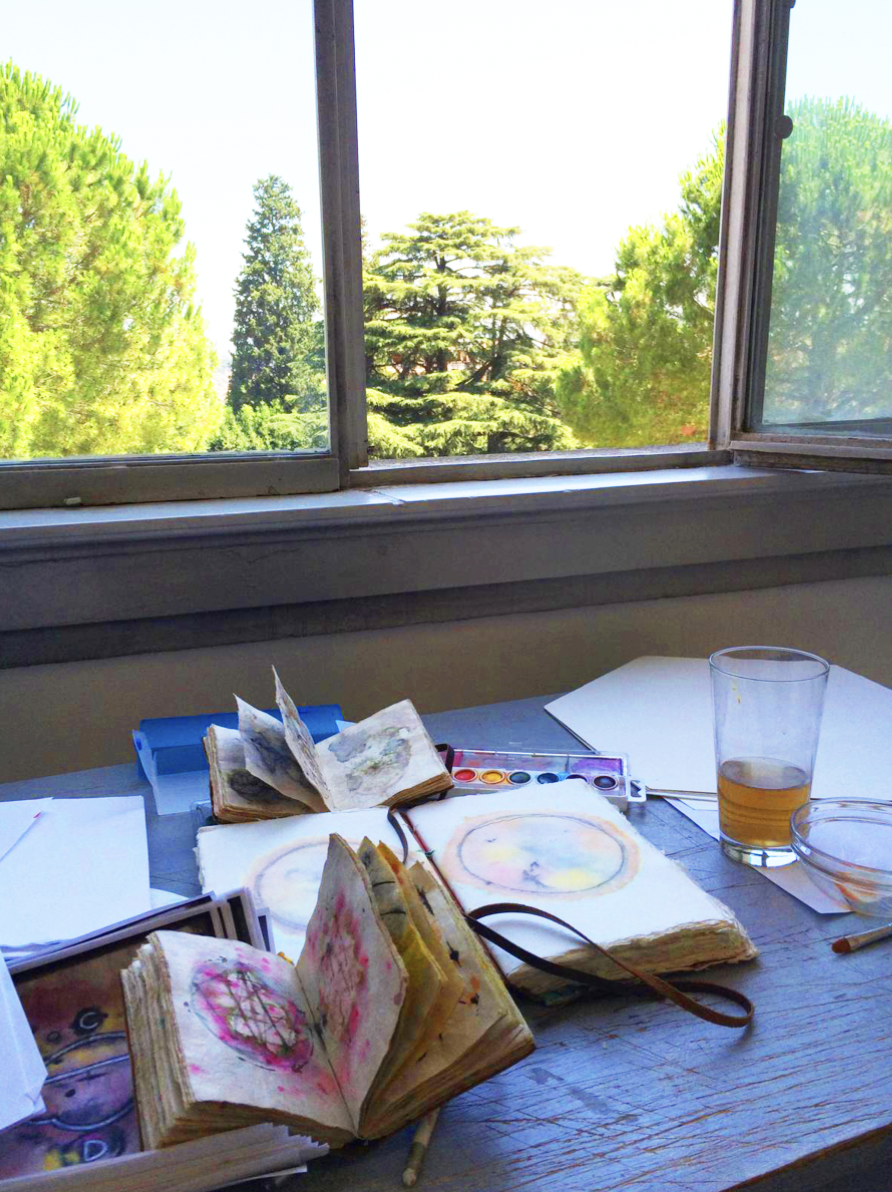
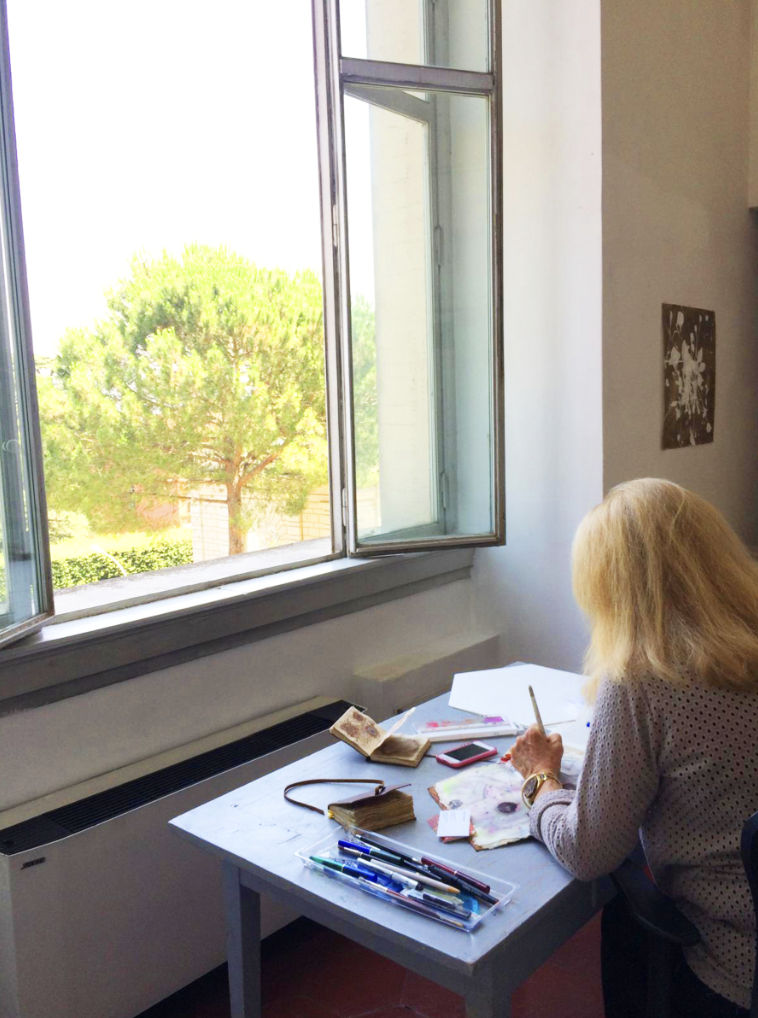
As an Artist in Residence at the American Academy in Rome, Karen Tompkins undertook a research-driven project inspired by the original sunspot drawings of Galileo Galilei, produced between 1610 and 1613. These historic sheets, among the earliest visual records of solar observation, are preserved in the Vatican Rare Manuscripts Library (Biblioteca Apostolica Vaticana). After an extensive approval process, Tompkins was granted special permission to study the drawings firsthand. Working within the Rare Manuscripts Reading Room, she meticulously copied Galileo’s notations and solar sketches, immersing herself in the scientific and aesthetic language of early telescopic discovery.
From this initial encounter, she felt compelled to spend five consecutive days studying and copying additional artworks by Galileo that illustrated his evolving theories of the cosmos. The remarkable environment of the library, its frescoed, hallowed halls and centuries-old traditions of scholarship, gave her a profound sense of connection to Galileo, the father of modern science. This immersion also allowed her to understand the intellectual context surrounding Galileo’s 1613 publication, Istoria e Dimostrazioni intorno alle Macchie Solari, in which he argued that sunspots are on or very near the Sun’s surface—directly contradicting the Church-supported Aristotelian belief in perfect, unchanging heavens.
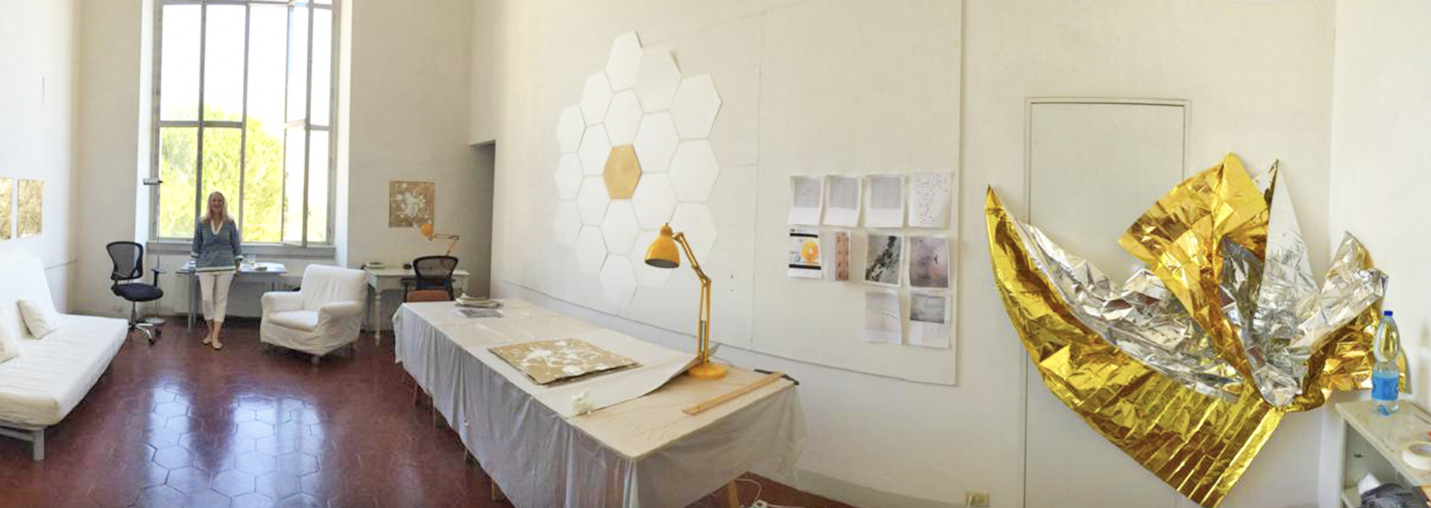
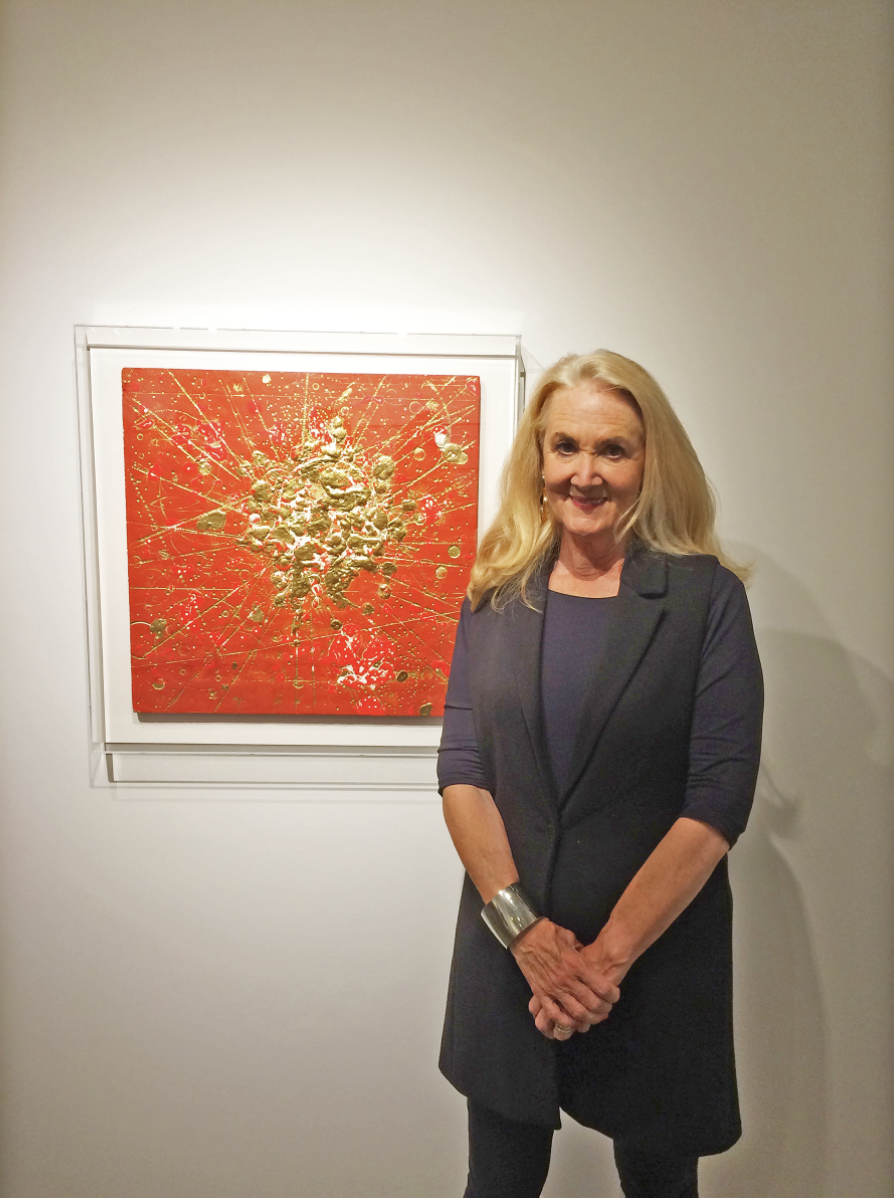
This experience became the catalyst for Tompkins’s Galileo Sunspots series. The work she produced is explosive in energy and marked a significant new direction in her practice, including her first use of gold leaf to articulate light, radiance, and celestial force. These paintings channel the intensity and wonder of Galileo’s discoveries into a contemporary visual language that fuses history, science, and abstraction.